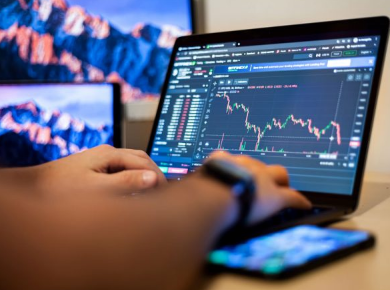
The global financial ecosystem is undergoing a major transformation, driven by digital innovation, cross-border accessibility, and increasing participation from retail and institutional traders. In this evolving landscape, modern trading ecosystems are becoming more data-driven and user-centric, enabling faster execution, deeper market analysis, and improved risk management. Among these developments, the tradingsphere platform is emerging as a structured gateway that connects traders with multiple asset classes, global liquidity networks, and advanced analytical tools designed to support informed decision-making. Market participation has expanded significantly in recent years, with trading volumes across forex, indices, and commodities showing steady growth as accessibility improves through technology. This shift highlights a broader trend toward decentralized engagement, where traders are no longer limited by geography or traditional brokerage barriers, but instead benefit from integrated platforms that unify global opportunities under one system.
Recent trading statistics indicate a steady rise in multi-asset participation, with more than 60% of active traders now diversifying across at least three asset categories. This diversification trend reflects increased awareness of risk balancing and portfolio optimization strategies. Additionally, algorithm-assisted trading and AI-based signals are becoming more prevalent, improving execution accuracy and reducing emotional decision-making. The demand for real-time analytics has also surged, with traders prioritizing platforms that offer live charting, sentiment tracking, and automated alerts. These developments show a clear shift toward intelligence-driven trading environments where efficiency and speed are key competitive advantages. As a result, platforms that integrate advanced tools and scalable infrastructure are gaining stronger adoption across both emerging and developed markets.
Another significant trend shaping the industry is the expansion of mobile-first trading behavior. Over 70% of retail traders now execute trades via smartphones or tablets, highlighting the importance of responsive design and seamless synchronization across devices. Security and transparency have also become critical priorities, with users expecting encrypted transactions, two-factor authentication, and real-time audit trails. Furthermore, global regulatory frameworks are encouraging more standardized trading practices, helping to build trust and stability in digital markets. These improvements are collectively contributing to a more structured and reliable trading environment where users can operate with greater confidence.
Looking ahead, the future of global trading is expected to be defined by automation, integration, and personalization. Intelligent systems will continue to refine trading strategies, while platforms evolve to deliver more customized insights based on user behavior and market conditions. This ongoing evolution signals a shift toward highly adaptive financial ecosystems where efficiency, transparency, and data intelligence work together to enhance overall trading performance across global markets.